
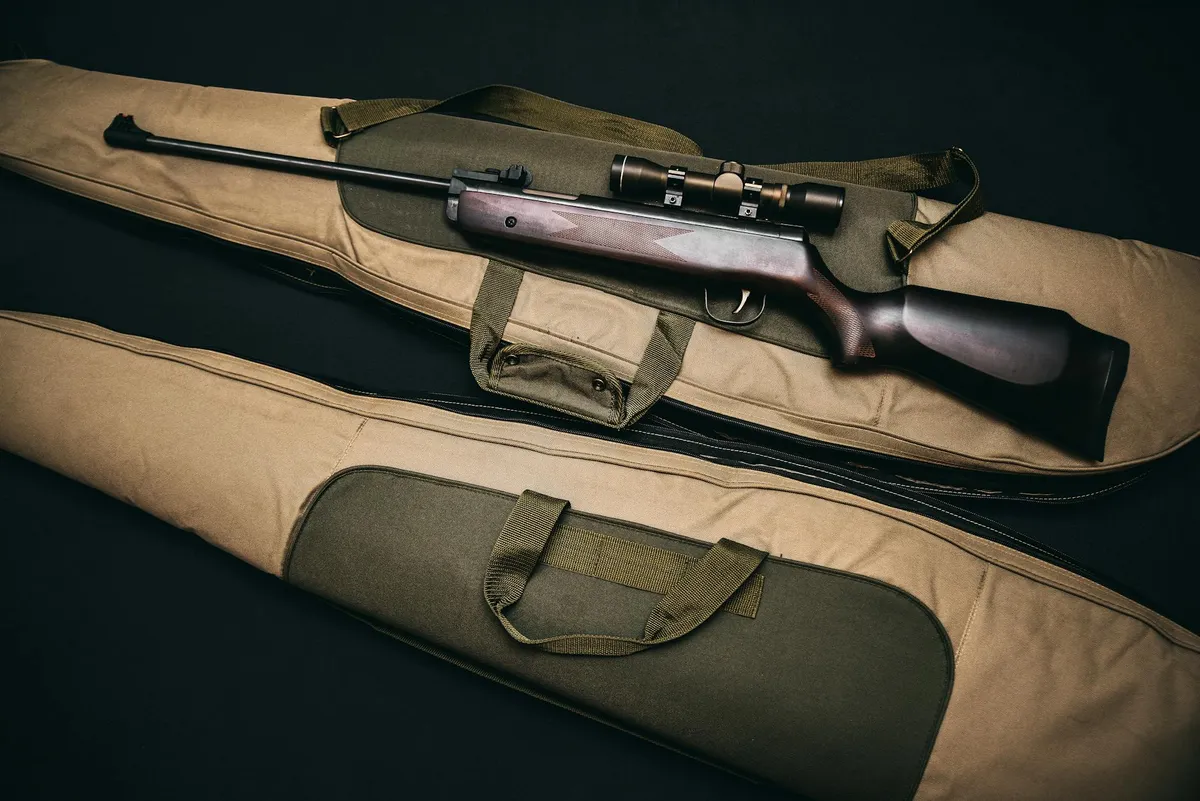
I bought a Tikka T3x Lite in 270 Winchester in May last year. I shot it through the summer at the range, took it on a roe deer hunt in September, used it again for moose in October, and then carried it as my primary precision rifle through the winter and into the next spring. Total round count as of this writing: 412. Total field hunts: nine. Total range sessions: thirty-three.
I wanted to write this review at the one-year mark specifically because most rifle reviews I read online are written after a single range session or, worse, are written by people who never owned the rifle they're reviewing. After a year of actual use, you start to know what a rifle actually does — and where it falls short. Here's what I've learned about the T3x Lite.
What the rifle is
The Tikka T3x Lite is a bolt-action hunting rifle with a synthetic stock, a smooth 60-degree bolt throw, and a steel receiver mated to a free-floating barrel. Mine is the 270 Winchester chambering with a 22.4-inch barrel, weighing 6.3 pounds bare and about 8.1 pounds with a Vortex Viper PST scope and a sling.
The price point in Norway when I bought it was around 12,500 NOK for the rifle alone. That's mid-range — not cheap, not expensive. Tikka has a strong reputation here and the rifles are common in Nordic hunting culture. I bought this one based on reputation and on a friend's recommendation rather than from any extensive research.
The first range session
I shot the rifle for the first time on May 12 last year at the local range outside Bergen. I cleaned it carefully, mounted the scope (10-Nm torque on the rings, per Vortex spec), and zeroed at 100 meters using 130-grain Federal Premium ammunition.
The first three-shot group, after warm-up rounds, measured 19mm center-to-center. The second group was 22mm. The third was 16mm. I was shooting from a rear bag with a small front rest, no bipod. For a hunting rifle out of the box with factory ammunition, this is good. The advertised "sub-MOA with quality ammunition" claim was confirmed.
The trigger pull, measured with a Lyman gauge at home that evening, came in at 2.5 lbs with very little creep. I left it at factory setting; many shooters lighten the Tikka trigger and that's easy to do, but I prefer the slightly heavier pull for hunting use.
Through hunting season
The first hunt was for roe deer on September 14. I shot a young buck at 95 meters from a kneeling position with the rifle resting on a stick. Single shot, the deer dropped immediately. The 270 Win at that range is, as expected, devastating on roe-sized game.
The second meaningful hunt was for moose on October 8. We were on a stand watching a small clearing. I had a clean shot opportunity at 220 meters — a cow moose, broadside, slightly quartering away. I shot once, the moose dropped after a fifteen-meter run, and we recovered her without difficulty. The shot was clean through both lungs.
The rifle performed exactly as I needed it to in both situations. It came up to the shoulder smoothly, the trigger was predictable, and the recoil from the 270 Win is moderate enough that I could recover quickly for follow-up shots. The synthetic stock and the lightweight construction didn't hurt anything in terms of accuracy or handling.
The cold-weather test
In late December I took the rifle to a precision rifle clinic in the mountains north of Bergen. Temperatures were around -8°C with light snow. We shot from prone position at distances from 100 to 600 meters across the two days.
This is where I learned something useful. The Tikka T3x Lite, in the cold, with thicker gloves and bulkier clothing, was slightly more awkward to manipulate than a heavier precision-specific rifle. The synthetic stock has a fairly slim grip that's comfortable in normal conditions but cold-grip work was more difficult.
Accuracy at distance was acceptable but not exceptional. My 500-meter groups with the same Federal Premium ammunition measured 175-220mm — about 1.3-1.6 MOA at distance. For a lightweight hunting rifle, this is fine; for precision work, it's the lower bound of what I'd want.
The reliability across 400+ rounds
Across the 412 rounds I've put through the rifle, I've had zero malfunctions. No feeding issues, no extraction issues, no trigger issues. The bolt action stays smooth. The magazine releases cleanly. The safety operates positively.
I cleaned the rifle after every range session in the first six months. After that, I started cleaning less aggressively — every 50-75 rounds rather than every session — and accuracy hasn't suffered. The throat shows minimal wear at the current round count.
Where the rifle falls short
For honest balance, here's where the T3x Lite has limitations. The stock, while functional, is fairly basic. It's not adjustable for length-of-pull or comb height. If you have a non-standard build or shoot with thick winter clothing, you may want a different stock.
The magazine is detachable but the standard capacity is three rounds. For most hunting situations this is enough; for some applications you'd want more.
The barrel contour is lightweight, which is good for carry but means the barrel heats faster than a heavier contour would. After three or four shots in succession, accuracy degrades noticeably. For hunting use this isn't a problem because you rarely take that many shots in succession; for precision work it's a real limitation.
What I'd do differently
If I were buying the rifle again, I'd probably go with the slightly heavier T3x Hunter model rather than the Lite. The added weight makes the rifle steadier for longer shots and the wood stock is more comfortable for me. The Lite's weight advantage matters for long carries, but most of my hunting involves shorter approaches where the weight difference is less important.
I might also consider a different chambering. The 270 Win is a perfectly good cartridge for what I do, but 6.5 Creedmoor would be slightly more flexible for the precision work I've been doing more of recently. That's a chambering decision rather than a rifle decision, though.
The bottom line
The Tikka T3x Lite has been a reliable, accurate, well-built hunting rifle. After a year and 400+ rounds, I'd buy it again — though I might pick the Hunter variant for the heavier stock. For Nordic hunting in mixed terrain at typical hunting ranges, it's genuinely well-suited.
For precision rifle competition or for shooting beyond 500 meters consistently, I'd look at other options — Tikka makes the T3x TAC A1 that's designed specifically for that, or you can go to other manufacturers entirely. The Lite is a hunting rifle that can do some precision work, not a precision rifle that can hunt.
If you're a Nordic hunter looking for a reliable mid-priced rifle that will probably outlast you, the Tikka T3x Lite is a solid choice. The specific 270 Win that I bought has earned a permanent place in my safe.