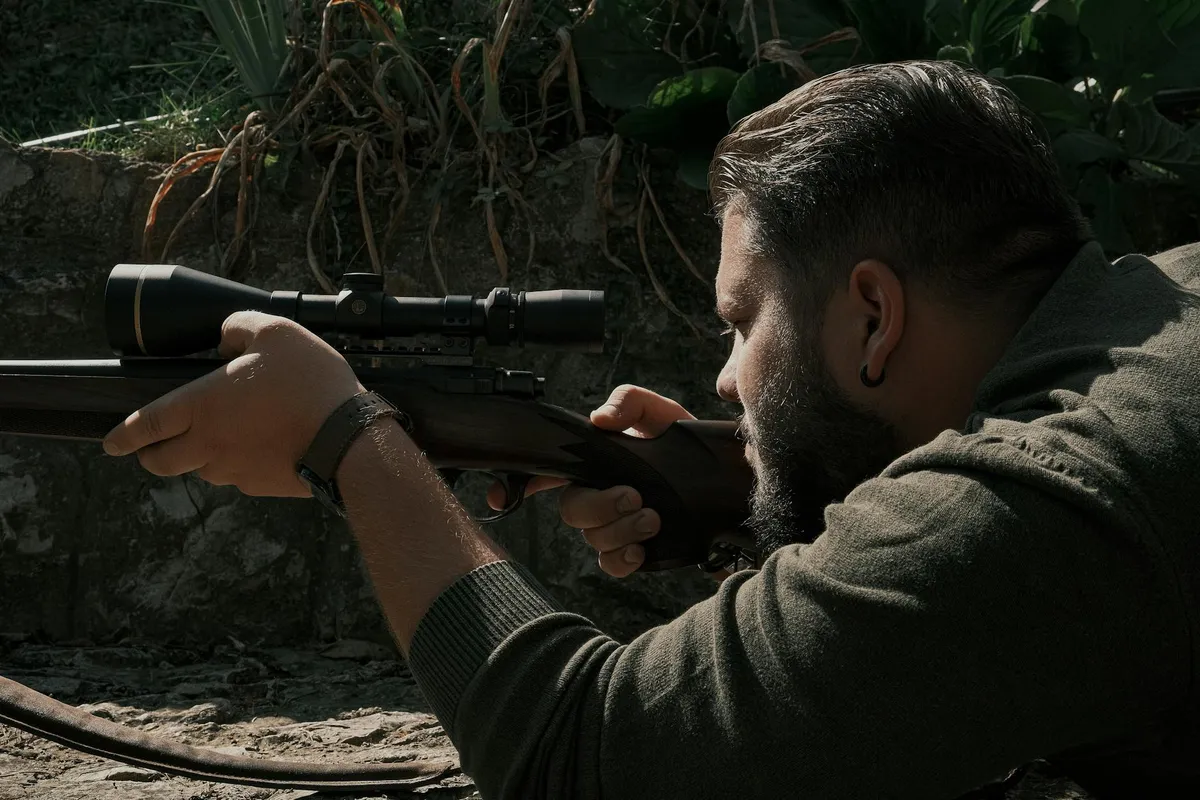
I bought a Swarovski Z8i 2-16x50 scope two years ago for use on my primary hunting rifle. The scope is in the premium price range — about 28,000 NOK at the time of purchase, which is multiple times the cost of competent mid-range alternatives. I want to write a long-term report on whether the premium has been worth it, because the cost-quality trade-off in optics is one of the things most online reviews don't address honestly.
This is a use report, not a technical review. I'm not going to test the scope in laboratory conditions. I'm going to describe what two years of actual use have shown me about the scope's performance, durability, and value relative to alternatives.
The use case
The scope has been mounted on a Sauer 100 Classic in 308 Win that I use for most of my big-game hunting. Across the two years it's been used for:
— Approximately 30 hunting trips, mostly for moose and roe deer, in conditions ranging from sunny summer mornings to -15°C winter days with snow.
— Approximately 60 range sessions, including precision work out to 600m and offhand shooting at closer ranges.
— Two competitive rifle matches where the scope was used in stress conditions with rapid magnification changes and target transitions.
Total round count under the scope: approximately 1,400. The scope has been subjected to all the abuse that a regularly-used hunting rifle scope receives — rough transport, weather extremes, occasional drops, normal mounting and dismounting for cleaning.
The optical performance
The first thing to say about the optical performance is that the difference between a top-tier scope and a mid-tier scope is most visible in marginal light conditions. In bright daylight, the difference between the Z8i and a competent mid-range scope is real but subtle. In the first and last hour of legal hunting light, the difference becomes substantial.
I've done direct comparison in low light against a Vortex Diamondback Tactical (about 5,500 NOK) and a Leupold VX-3i (about 13,000 NOK). At 30 minutes before sunset, all three scopes can identify game-sized targets. At 15 minutes before sunset, the Vortex starts to struggle with target identification. The Leupold maintains good performance to about 5 minutes before sunset. The Swarovski maintains useful image to roughly 10 minutes after sunset — beyond legal shooting time in most situations but useful for tracking and observation.
The 30-40 minute window at dawn and dusk where the Swarovski has clear advantage over the Leupold is, for hunting use, the window when most game movement happens. The optical advantage in that window directly translates to hunting effectiveness.
The mechanical reliability
The scope has held zero through two years of use. I've verified zero at the start of each hunting season and after any incident that might have shifted it (a drop, a rough transport, etc.). The zero has been consistent within my measurement ability — perhaps 1-2mm at 100m across all checks.
The turret tracking is precise. I've verified tracking at 100m and 300m using a tall-target test (clicking the elevation through its full range and verifying impact at expected positions). Tracking has been correct within the resolution I can measure.
The magnification ring is smooth and consistent. After two years there's no notable wear or roughness. The illumination control is similarly solid — no failures, no inconsistencies.
The durability under abuse
The scope has been dropped twice — once from about a meter onto soft snow, once from waist height onto a wooden floor. In both cases the scope maintained zero and showed no visible damage. The objective lens has small scratches from normal use but no major damage.
The waterproofing has held. The scope has been used in heavy rain and snow without internal fogging or moisture intrusion.
The protective lens caps that came with the scope are still functional after two years. This sounds trivial but cheap lens caps fail within months on harder use; the included caps have held up.
Where the scope falls short
The first complaint is weight. The Z8i weighs about 540g, which is on the heavier side for hunting scopes. On a lightweight hunting rifle, the scope contributes meaningfully to overall weight. If I were primarily doing mountain hunting where every gram matters, I might choose a lighter scope.
The second complaint is the parallax adjustment. The scope has parallax correction but it's on the left turret rather than the more-accessible side knob. For rapid range estimation in dynamic situations, the placement is slightly slower than scopes with side-focus.
The third complaint is the eyebox. The Z8i has a smaller eyebox than some competitor scopes — meaning you need to be more consistently positioned behind the scope to get a clean image. For practiced shooters this is a minor consideration; for less-experienced shooters or for awkward shooting positions, the smaller eyebox can be a real limitation.
The cost-value question
The hard question is whether the 28,000 NOK was worth it relative to the 13,000 NOK Leupold or the 5,500 NOK Vortex. The honest answer depends on use case.
For my use case — regular hunting in low-light conditions, occasional precision work, expectation of using the scope for 10-15 years — the premium has been justified. The low-light advantage matters for hunting effectiveness. The mechanical reliability has been demonstrated across two years of use. The long-term durability appears strong, which spreads the cost across many years of use.
For a hunter who shoots primarily in daylight, who isn't doing extensive precision work, or who would replace the scope within a few years anyway, the value calculation is different. The Leupold provides 80% of the Z8i's performance at 50% of the cost. The Vortex provides 65% of the performance at 20% of the cost.
The Z8i's advantage is real but specific. If your use case doesn't exercise that advantage, the cheaper scope is the better value.
The longer-term thinking about scope investments
One thing this two-year experience has clarified for me is that scope investments should be made with multi-year time horizons. A scope that you'll use for 15 years should be evaluated against the 15-year cost — which makes the premium scope's daily cost much more competitive than the upfront price suggests.
The other useful framing is that the scope is the part of the rifle that you're actually looking through. The rifle itself is the launch platform; the scope is the interface between you and the target. Spending more on the interface than on the launch platform often makes more sense than the reverse — though most shooters intuitively want to spend more on the rifle.
If I were starting from scratch with a fixed budget, I would probably allocate more to optics than is intuitive — at the cost of a less prestigious rifle. The Tikka T3x or the Sauer 100 paired with a Z8i is, in my experience, a better hunting setup than a premium rifle paired with a mid-range scope.
The closing observation
Two years of use have made me a Swarovski customer. The optical performance, the mechanical reliability, and the durability have all met the expectations the price suggested. The premium has been justified for my use case.
Whether the premium is justified for your use case depends on what you actually do with your rifle. If you're shooting in good light at moderate distances and replacing scopes regularly, you don't need a Z8i. If you're hunting in marginal light, doing distance work, and planning to use the scope for a decade or more, the premium investment likely returns its cost in better hunting outcomes and longer service life.
Make the choice based on your actual use rather than on aspirational use. The Z8i is a tool for specific work. If that work is what you're doing, the tool is excellent. If it isn't, the money is better spent elsewhere.