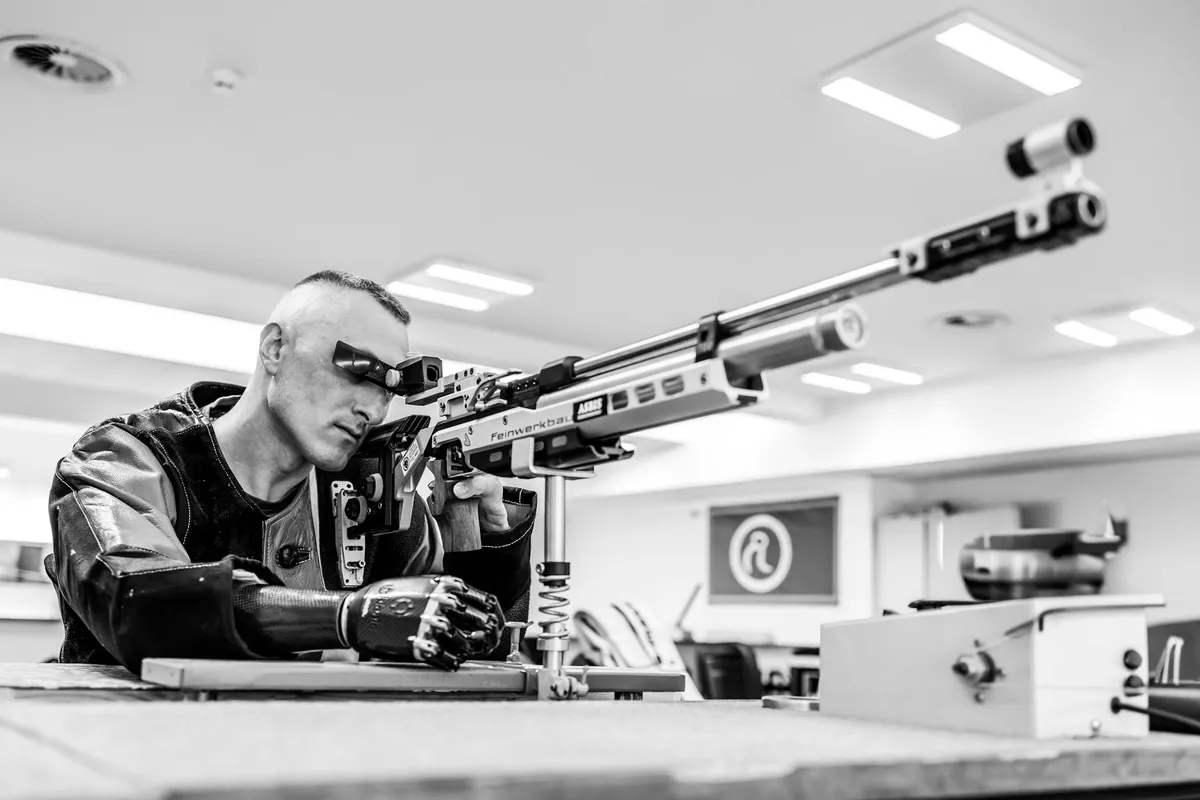
I shot a precision rifle match outside Trondheim last month. It went badly from the start. I want to write about it because most competition writing focuses on wins or close losses, and the bad days are where the real learning happens. This was a bad day. I want to talk about what happened, what I learned, and why I think finishing the match was the right call even though my scores didn't reflect well.
The setup
The match was a two-day precision rifle competition with twelve stages spread across both days. Distances ranged from 150 to 850 meters. Stages combined positional shooting, time pressure, target identification, and the usual range of precision rifle challenges. Field about 60 shooters, mostly Norwegian and Swedish, with a few Finns. Good event.
I had been training specifically for this match for three months. My equipment was sorted — Bergara HMR Pro in 6.5 Creedmoor, Vortex Razor scope, Atlas bipod, my regular hand-loaded ammunition. I knew the rifle and ammunition, having shot probably 1,500 rounds through that combination across the previous year.
Stage one — the early disaster
The first stage was 600 meters from prone, four targets, 90 seconds to engage. Should have been straightforward.
I missed the first three shots. Like, completely missed — no impact visible on the target frame. By the time I figured out my dope was wrong, I had burned 30 seconds and made up nothing. I scored 1 of 4 hits on the stage. The shooter next to me scored 4 of 4.
What had happened: my ballistic data for the day was wrong. I had loaded my hand-loads from a fresh batch the previous week and the velocity was about 30 fps slower than the data I had calibrated my drops on. At 600m that translates to roughly 80cm of drop difference — enough to miss the target frame entirely.
What I should have done
I should have shot the new ammunition over the chronograph the previous week. I knew this. I had told myself I would do it. I didn't do it because the weather was poor and I figured the velocity would be close enough. It wasn't close enough.
The fundamentals of precision rifle shooting include knowing your ammunition. I knew the principle. I violated it because I got lazy. The first stage paid for the laziness directly.
Stages two through four — the recovery attempts
Stage two was 425 meters with positional shooting. I applied a guess-correction for my dope based on the stage one misses and got it close enough — 3 of 5 hits. Not good but at least respectable.
Stage three was 250 meters with target transitions. The dope was less critical at that distance and I scored 4 of 5.
Stage four was 750 meters from a barricade position. This was the worst stage of the day. I missed all four targets. My dope correction wasn't working consistently — the rounds were going somewhere but I couldn't see them clearly enough to spot the impacts on the steel.
By the end of stage four I had 8 of 18 possible hits. I was in roughly the bottom 15% of the field after four stages.
The lunch break decision
At lunch I sat in my car and seriously considered dropping out. The dope problem was unrecoverable without re-chronographing, which I couldn't do at the match. My remaining stages were going to be heavily impacted. The likely outcome was a low finish that wouldn't reflect my actual shooting capability.
I thought about it for about twenty minutes. Then I decided to stay. The reasoning was that I was here, I had paid the entry fee, and I was going to learn more from finishing the match badly than from quitting. Also: my dope problem at distance was real, but my close- and mid-range shooting was still functional. I could shoot the eight remaining stages and learn something from each, even with the dope handicap.
Stages five through twelve — the long afternoon
The afternoon was a grind. I shot every stage. I missed more than I hit at the longer distances. I scored reasonably on the closer stages where my dope error mattered less. I finished the first day at roughly the same low percentage I had been at after stage four.
I spent the evening at the hotel re-doing my ballistic calculations with the assumed-slower velocity. I couldn't verify the actual velocity but I could work with a reasonable estimate based on what I had seen.
Day two — applying what I had learned
Day two was substantially better. My dope corrections, while still imperfect, were close enough to score hits at longer distances. I scored 14 of 20 possible hits across the day-two stages. That's not a strong performance by competitive standards but it's much better than the day-one numbers.
Total match performance: roughly bottom 25% of the field. Not embarrassing in absolute terms — most precision rifle matches have some shooters who finish low. But well below what I was capable of with proper preparation.
What I learned
The first lesson, obviously, is to verify dope before matches. I knew this principle. The failure to apply it cost me the match. There's no shortcut around this fundamental.
The second lesson is more interesting. My mid-distance and close-distance shooting was solid even on a bad day. The training had built capability that survived the bad day. The lesson is that consistent fundamentals show up under stress in ways that recently-acquired capabilities often don't. The closer-range work I had been training rigorously held up; the distance work that depended on dope accuracy fell apart when the dope was wrong.
The third lesson is about finishing. I almost quit at lunch. Quitting would have been understandable; finishing was harder. The reason finishing was the right call isn't that the score got better — it didn't, by much. The reason was that finishing produced eight more stages of competitive shooting practice that I wouldn't have gotten otherwise. Each of those stages taught me something, even when the dope was wrong. Quitting would have ended the learning.
The bigger principle about bad days
Most shooters have bad days. The question is what you do with them. Two responses are typical: minimize the bad day (don't talk about it, file it as bad luck) or treat it as evidence of fundamental problems (overreact, change your equipment, restructure your training).
Neither response is quite right. The bad day is data. It tells you something specific about your preparation, your equipment, your skill set. The job is to extract the specific lesson and apply it without overcorrecting.
My specific lesson from this match: chronograph new ammunition before competitions. Not "rebuild my training." Not "buy a new rifle." The specific lesson about the specific failure mode that happened.
What's changed in my preparation
Since the match, I've added a pre-match equipment verification protocol. Two weeks before any match: chronograph current ammunition batch, verify scope tracking, confirm dope chart with live fire at three known distances, verify all gear is functional.
The protocol takes about three hours per match and would have caught the velocity problem in plenty of time to address it. It's the kind of thing serious competitive shooters do automatically; I had been operating with a less rigorous approach and got caught.
The closing thought
Bad matches are part of competitive shooting. They're also one of the more valuable sources of learning if you treat them as data rather than as either bad luck or evidence of fundamental incompetence. The match outside Trondheim was a bad day. It also produced specific learning that has changed my preparation. The trade-off is acceptable, and finishing the match was the right call.
If you have a bad match coming, my advice is: finish it. The score is going to be bad either way. The learning is only available if you complete the rounds. The lesson is in the doing.